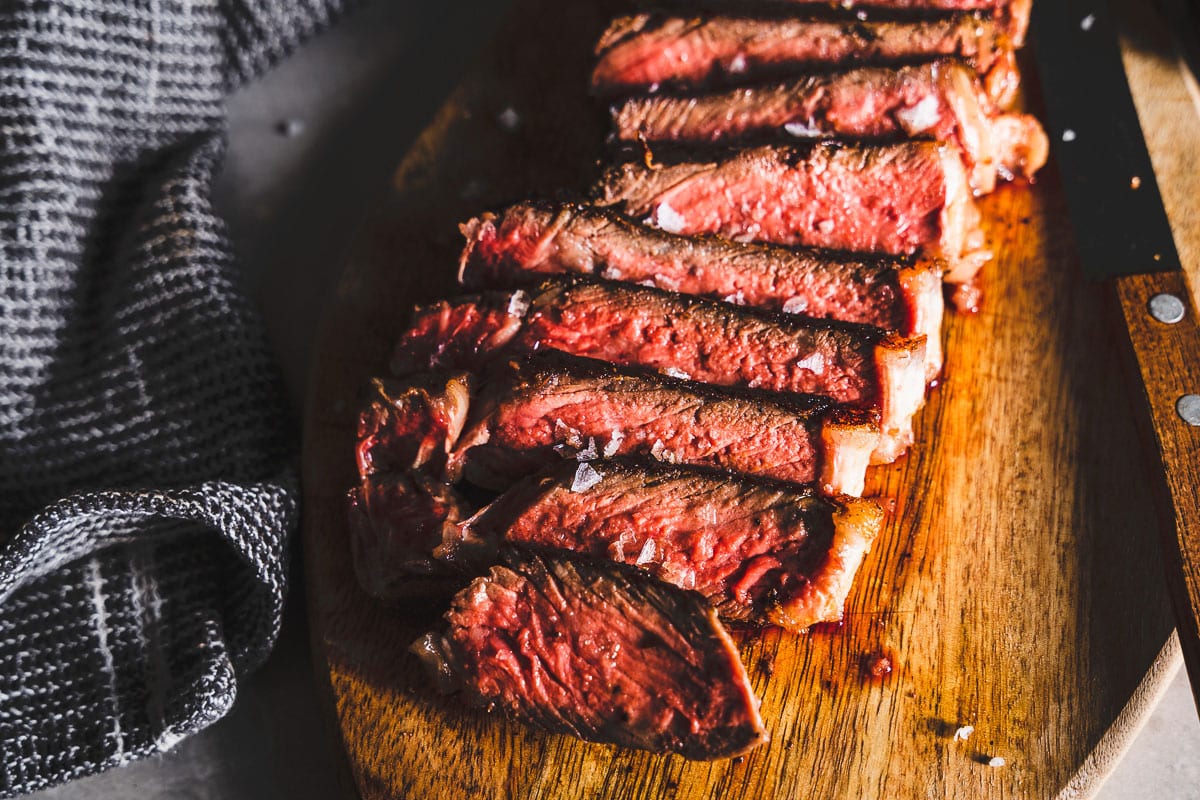
Understanding the Reverse Sear: A Culinary Revolution for NY Strip Steaks
For countless home cooks, achieving that elusive, perfectly cooked steak – juicy and tender throughout with a beautifully crisp, savory crust – has felt like a chef's secret, often out of reach. Traditional methods, focusing on searing first, often lead to an unevenly cooked steak with a grey band around the edges and a less-than-satisfying texture. However, a revolutionary technique has emerged, transforming the way we approach steak preparation: the reverse sear.
What exactly is reverse searing? In simple terms, it's the inverse of conventional steak cooking. Instead of starting with a high-heat sear, the reverse sear begins by gently cooking the meat at a low temperature, either in the oven or over indirect heat on a grill. This slow initial cook allows the internal temperature of the steak to rise gradually and evenly from edge to edge. Once the steak reaches its desired internal temperature (or just below it), it's then subjected to a quick, intense sear on a very hot surface, which develops that irresistible, golden-brown, crispy crust we all crave.
This method brilliantly debunks the long-held myth that searing "locks in juices." While searing undeniably adds incredible flavor through the Maillard reaction, it doesn't prevent moisture loss. What reverse searing *does* achieve is a superior internal texture and incredible juiciness, as the low and slow initial cook minimizes moisture loss and creates unparalleled tenderness. The result? Every single bite of your reverse seared ny strip steaks made by this method will be a mouthwatering slice of heaven, showcasing an even doneness that truly transforms your steak game.
Why the NY Strip Steak is Ideal for Reverse Searing
While the reverse sear technique works wonders for many thick cuts of meat, it's particularly suited for a robust and flavorful steak like the New York Strip. The NY Strip, known for its distinct beefy flavor, excellent marbling, and satisfying texture, truly shines when prepared with this method. Unlike leaner cuts that can dry out easily, the NY Strip's fat content renders beautifully during the low and slow cook, basting the meat from within and contributing to its incredible juiciness.
Here's why the NY Strip, in particular, benefits so profoundly from the reverse sear:
- Uniform Doneness: The inherent thickness of a quality New York Strip (ideally 1.5 inches or more) means it's prone to overcooking on the exterior while the center remains undercooked with traditional searing. Reverse searing mitigates this by allowing the heat to penetrate slowly and evenly, ensuring a consistent pink from edge to edge without any dreaded grey bands.
- Enhanced Tenderness: The gentle, prolonged exposure to heat slowly breaks down connective tissues, resulting in an exceptionally tender steak. This is particularly noticeable with the NY Strip's firmer texture compared to, say, a tenderloin.
- Superior Crust Development: After the gentle bake, the surface of the NY Strip is drier, which is crucial for achieving an outstanding, crackling crust during the final sear. The intense heat reacts perfectly with the dried surface, creating that deep brown, flavorful exterior.
- Flavor Amplification: The combination of the rendered fat during the slow cook and the intense caramelization of the sear creates a complex flavor profile that elevates the inherent richness of the New York Strip.
Many home cooks, including ourselves, have been reverse searing steaks for over ten years and swear by this method as the best and only way to ensure perfectly cooked steaks every single time, especially for a full-size New York Strip steak. It truly is the secret to making the best steak you've ever cooked in your home.
The Step-by-Step Guide to Reverse Seared NY Strip Perfection
Ready to revolutionize your steak experience? This detailed guide will walk you through creating Master the Reverse Sear: Perfectly Cooked NY Strip Every Time, ensuring juicy, tender meat with a crispy crust every single time.
Preparation is Key
- Choose Your Steak Wisely: Opt for thick-cut New York Strip steaks, ideally 1 1/2 to 2 inches thick. Thicker steaks are more forgiving and allow the reverse sear method to work its magic more effectively.
- Season Generously: At least 45 minutes, but preferably an hour or two (or even overnight) before cooking, liberally season both sides of your steak with coarse salt (like kosher salt) and freshly cracked black pepper. Don't be shy – this builds flavor and helps draw out surface moisture.
- Pat it Dry: Before cooking, use paper towels to thoroughly pat the entire surface of your steak dry. A dry surface is critical for achieving a beautiful, crispy crust later on.
- Gather Your Tools: You will need a reliable oven, a sturdy baking rack set over a baking sheet, and most importantly, an accurate meat thermometer. A good quality instant-read thermometer is your best friend here; do *not* rely solely on a timer. For a deeper dive into the technique, you might want to check out Why Reverse Searing is the ONLY Way for Perfect NY Strip Steaks.
The Low & Slow Cook (Oven Method)
This is where the magic begins. You're aiming for a slow, gentle rise in internal temperature.
- Preheat Your Oven: Set your oven to a low temperature, typically between 250-275°F (120-135°C).
- Place the Steak: Arrange the seasoned and dried steaks on a wire rack set over a baking sheet. This allows for even air circulation around the steak.
- Monitor with a Thermometer: Insert the probe of your meat thermometer into the thickest part of one of the steaks, avoiding bone. This is non-negotiable.
- Cook to Target Temperature: Roast in the preheated oven until the internal temperature reaches approximately 10-15°F (5-8°C) below your desired final doneness.
- For Rare (125°F/52°C final): Pull at 110-115°F (43-46°C)
- For Medium-Rare (130-135°F/54-57°C final): Pull at 115-120°F (46-49°C)
- For Medium (135-140°F/57-60°C final): Pull at 120-125°F (49-52°C)
Estimated Cooking Times (for 1 1/2 inch thick steaks at 250-275°F): This can vary greatly, but expect around 20-30 minutes for medium-rare. For a 1 1/4 inch thick steak, it might be closer to 20 minutes to reach 110°F. Always use your thermometer, not a timer!
- Rest (Briefly): Once the steak reaches its target internal temperature, remove it from the oven and let it rest on the wire rack for 5-10 minutes. This allows the surface moisture to evaporate further and sets the stage for a spectacular sear.
The High-Heat Sear (Stovetop Method)
This is where the magic crust happens, locking in flavor and texture.
- Heat Your Pan: While the steak is resting, place a heavy-bottomed skillet (cast iron is ideal) over high heat. Allow it to preheat for 3-5 minutes until it's smoking hot.
- Add Oil: Add a high smoke point oil (like grapeseed, avocado, or canola oil) to the pan, just enough to coat the bottom. Swirl to distribute.
- Sear the Steaks: Carefully place the steaks in the screaming hot pan. Sear for 60-90 seconds per side, until a deep, golden-brown crust forms.
- Add Flavor (Optional): During the last 30-60 seconds of searing, you can add 1-2 tablespoons of unsalted butter, a few cloves of smashed garlic, and a sprig of fresh rosemary or thyme to the pan. Tilt the pan and spoon the melted, fragrant butter over the steak repeatedly (basting). Don't forget to sear the edges of the steak too for about 30 seconds each.
The Crucial Final Rest
Don't skip this step! It's as important as any other.
- Remove and Rest: Transfer the seared steaks to a clean cutting board. Tent loosely with foil and let them rest for at least 5-10 minutes. This allows the juices, which have been driven to the center during searing, to redistribute throughout the meat, resulting in a significantly juicier steak. The internal temperature will also continue to rise by a few degrees during this time (carryover cooking).
- Slice and Serve: Slice against the grain and serve immediately. Prepare for applause!
Advanced Tips and Troubleshooting for Your Reverse Seared NY Strip
Mastering the reverse sear is an ongoing journey, and a few expert tips can elevate your results even further:
- Use a Leave-In Probe Thermometer: For ultimate precision during the low-and-slow cook, a thermometer that stays in the steak and alerts you when the target temperature is reached is invaluable. This prevents constant opening of the oven door, which can fluctuate the temperature.
- Don't Overcrowd the Pan: When searing, cook steaks in batches if necessary to avoid overcrowding the pan. Overcrowding lowers the pan's temperature, leading to steaming rather than searing, and a less-than-crispy crust.
- Embrace the Grill: While the oven method is fantastic, you can also achieve superb reverse seared NY strip steaks made by using a grill. For the low-and-slow cook, set up a two-zone fire (coals on one side, empty on the other) and place the steak on the indirect side. Finish by moving it over the direct, high heat. This adds a wonderful smoky char.
- Compound Butters: For an extra layer of flavor, consider topping your finished steak with a dollop of herb compound butter (e.g., garlic-parsley butter) during the rest. The melting butter will infuse the meat with richness.
- Troubleshooting a Soft Crust: If your crust isn't as crispy as you'd like, ensure your steak was *very dry* before going into the oven and again before searing. Also, confirm your pan was *smoking hot* before adding the steak. Don't be afraid of the high heat!
Conclusion: Elevate Your Home Cooking
The reverse sear technique isn't just another way to cook steak; it's arguably the *best* way to prepare a magnificent cut like the New York Strip. By embracing the philosophy of low-and-slow first, followed by a fierce sear, you unlock a level of tenderness, juiciness, and crust development that is simply unmatched. Gone are the days of overcooked edges and undercooked centers. With a good meat thermometer and a little patience, you can consistently achieve restaurant-quality results in your own kitchen or backyard. So, go ahead, grab a thick New York Strip, and prepare to achieve juicy, tender steaks with a crispy reverse sear that will impress everyone at your table.
